Beautiful Breakdowns: How Digital Glitches Became the Art World's Favorite Aesthetic
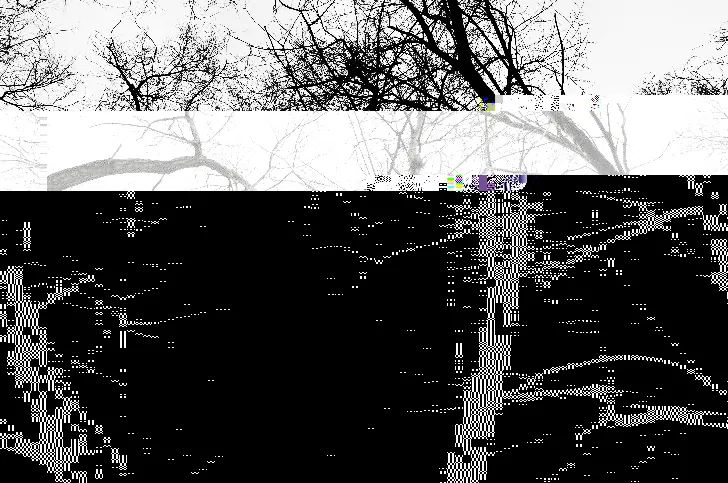
Photo: Lucas Rafael Tenllado Gil, CC BY-SA 4.0, via Wikimedia Commons
There's a specific kind of panic that hits when your screen starts tearing apart. Colors bleed into wrong places. Pixels scatter like shattered glass. Text renders as gibberish. Most people slam the restart button. A growing community of artists? They hit record.
Glitch art — the intentional use of digital errors, data corruption, and system failures as creative raw material — has quietly evolved from a niche internet curiosity into a legitimate, widely recognized aesthetic movement. And if you've spent any time scrolling through contemporary digital galleries, experimental video content, or even mainstream album artwork lately, you've already seen its fingerprints everywhere.
From Accident to Intention
The origins of glitch aesthetics aren't exactly clean-cut, which is fitting. Early practitioners in the '80s and '90s stumbled onto corrupted video signals and degraded VHS artifacts not by design but by accident — and then made a deliberate choice to keep them. Artists like Nam June Paik were manipulating television signals decades before anyone had a name for what they were doing.
But the internet era supercharged everything. Once digital files became universally accessible, so did the tools to break them. Databending — the practice of opening an image or audio file in software it was never meant for, like opening a JPEG in a text editor and saving it back — became a low-barrier entry point. You didn't need expensive gear. You needed curiosity and a willingness to let things go sideways.
New York-based artist Rosa Menkman, one of the most cited voices in glitch theory, has written extensively about how errors reveal the hidden architecture of digital systems. The glitch, in her framing, isn't a failure — it's a moment of exposure. The machine shows you something it wasn't supposed to.
The Tools of Controlled Chaos
Ask a glitch artist how they work and you'll get wildly different answers, which is kind of the whole point. Some use purpose-built software like Audacity (yes, the audio editor) to corrupt image data by treating visual files as sound waves. Others write custom scripts to deliberately introduce errors into video streams. A few still go analog, physically damaging storage media or running magnets over old hard drives.
Game developers have started playing in this space too. Indie studios have leaned hard into visual corruption as a storytelling device — think the distorted menus and broken save files of Undertale or the intentionally glitched-out sequences in Doki Doki Literature Club. The glitch stops being decoration and becomes narrative. When the game appears to malfunction, the player's sense of safety collapses. That's not a bug. That's design.
Streamer and experimental game developer Kris Lorischetti, who operates out of Portland, described it well in a recent community post: "When I break something on purpose and someone watching thinks it's real, that split second of genuine confusion — that's the art. You can't buy that reaction."
Why Imperfection Hits Different Right Now
There's something almost philosophical about why glitch aesthetics resonate so hard in the current moment. We live inside a digital environment that's obsessively optimized for smoothness. Apps load in milliseconds. Interfaces are frictionless. Everything is designed to feel effortless, invisible, clean.
Glitch art punches straight through that illusion. It forces you to see the seams, the underlying code, the fact that everything you're looking at is constructed — fragile in ways the polished surface hides. In an era of AI-generated content that aims for seamless perfection, the raw, broken aesthetic feels almost rebellious. It says: something real happened here.
There's also a generational texture to it. Millennials and Gen Z audiences grew up with loading screens, corrupted save files, and YouTube videos that pixelated into abstract noise. Those aren't just technical memories — they're emotional ones. Glitch aesthetics tap into a kind of digital nostalgia that's uniquely contemporary.
Where It Lives Now
Glitch art isn't confined to obscure corners of the internet anymore. You'll find it in music videos (Kanye West's visual collaborators have leaned into corrupted imagery for years), in fashion photography, in gallery installations, and increasingly in the NFT space where artists like XCOPY built enormous audiences around fractured, distorted digital works.
Social platforms like Instagram and TikTok have entire subcultures dedicated to glitch-adjacent aesthetics — VHS filters, scan line overlays, corrupted text effects. Most of that is surface-level imitation, the aesthetic without the philosophy. But it signals how thoroughly the visual language has penetrated mainstream digital culture.
The more serious practitioners tend to congregate in smaller spaces — Discord servers, experimental net art forums, curated digital galleries like Rhizome. These are places where the conversation goes deeper than just the look of the thing, into questions about what digital systems actually are, who controls them, and what it means when they fail.
The Error as Statement
What makes glitch art genuinely compelling — beyond its visual impact — is that it asks a question most digital experiences are designed to suppress: what's actually underneath this? Every polished interface is hiding infrastructure. Every seamless experience is a negotiation between hardware, software, and human expectation. The glitch refuses to let you forget that.
For the artists who've built careers around embracing malfunction, that's not an inconvenience. It's the whole point. The breakdown, deliberately induced or carefully preserved, becomes a kind of honesty that clean design can't replicate.
Next time your screen does something it shouldn't, maybe hold off on that restart for just a second. There's a chance you're looking at something worth keeping.