Play, Create, Repeat: The New Platforms Turning Audiences Into Co-Creators
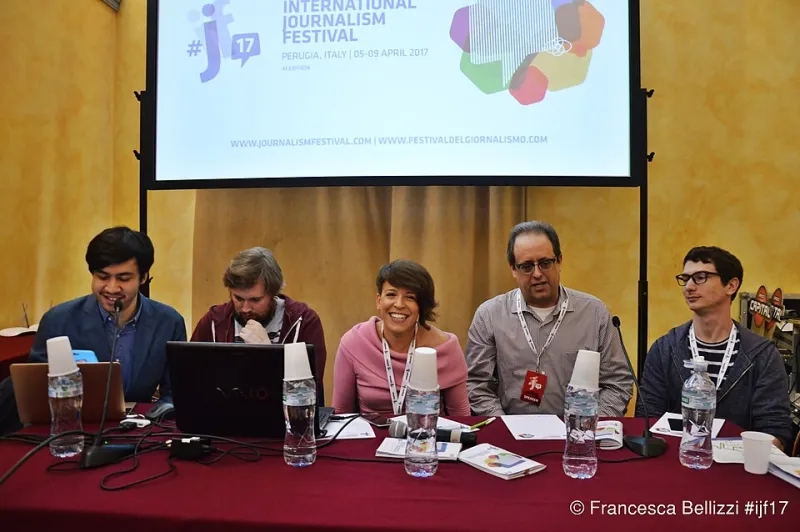
Photo: International Journalism Festival, CC BY-SA 2.0, via Wikimedia Commons
For most of recorded history, art had a pretty clean arrangement: someone made it, everyone else experienced it. The painter painted. The crowd looked. The musician played. The audience clapped. Roles were clear, credit was obvious, and the transaction was one-directional.
That deal is falling apart in the most interesting ways possible.
A new wave of platforms and tools is actively dismantling the creator/consumer divide, handing audiences real creative agency — not just the illusion of it. We're not talking about comment sections or fan art. We're talking about tools where the audience genuinely shapes, builds, and sometimes is the work. And the people navigating this shift are figuring out, in real time, what it means for ownership, credit, and the whole idea of what art is supposed to be.
Twitch as a Living Canvas
If you want to understand where participatory creation is already mainstream, start with Twitch. What began as a video game streaming platform has quietly evolved into one of the most sophisticated laboratories for live collaborative art on the internet.
Beyond the obvious stuff — chat reacting to gameplay, polls deciding character names — some streamers are pushing the format into genuinely experimental territory. Collaborative pixel art projects like r/place (which technically lives on Reddit but shares Twitch's communal DNA) have demonstrated that tens of thousands of people can build something coherent and visually striking together, even without central coordination. Twitch streamers running "audience choice" narrative games have turned their broadcasts into branching stories where chat votes determine everything from dialogue options to major plot outcomes.
Artist and streamer Cass Ellison, who runs a generative art stream where viewers submit parameters that shape each piece in real time, describes it as "the most alive I've ever felt making something." The work isn't hers alone — but it also couldn't exist without her. That tension is exactly where things get interesting.
The Music Apps Blurring Authorship
Music might be where co-creation tools are evolving fastest right now. Apps like Splice, Soundtrap, and the newer Udio and Suno have made it genuinely easy for non-musicians to contribute to, remix, and build on existing work. But the more transformative shift is happening in platforms designed explicitly for collaborative creation between artists and their audiences.
BandLab, a free music creation platform with over 80 million registered users, lets anyone build on a track someone else started. A producer in Atlanta uploads a beat; a vocalist in Portland adds a hook; someone in Austin layers in a guitar line. The final track might have six credited contributors who've never met. Who owns it? Who gets paid if it blows up? These aren't hypothetical questions anymore — they're active legal and ethical debates the music industry is genuinely scrambling to answer.
Some artists are leaning into the ambiguity deliberately. Electronic musician and producer Holly Herndon has spent years exploring AI-assisted and community-generated music, explicitly framing her audience as collaborators rather than consumers. Her 2019 album PROTO involved training an AI on her fans' voices. The result was something that belonged to everyone and no one at the same time — which, depending on your perspective, is either the future of music or a philosophical headache.
Participatory Storytelling and the Author Problem
Gaming has always had participatory elements baked in — you're always, at minimum, choosing how to move through a designed space. But a newer generation of experiences is collapsing the distinction between player and author even further.
Platforms like Twine and Ink have made branching narrative creation accessible to non-coders, spawning entire communities of interactive fiction writers who share and remix each other's story structures. But the really wild experiments are happening in live, multiplayer narrative spaces.
Games like Phasmophobia and Sea of Thieves generate emergent stories entirely from player interaction — the developers set the stage, but the audience writes the play. More explicitly participatory projects, like the ongoing collaborative fiction experiments on platforms such as AI Dungeon and Storium, let players co-write stories in real time with both human and AI collaborators.
For tabletop roleplaying communities that have migrated online — especially the massive actual-play streaming scene, where shows like Critical Role have built audiences of millions — the relationship between performer and viewer has become genuinely porous. Fan theories shape future storylines. Community creations get acknowledged and sometimes incorporated. The story is no longer just the storytellers'.
Who Gets Credit? Who Gets Paid?
All of this raises questions that don't have clean answers yet.
When an audience co-creates a piece of work, the traditional frameworks for attribution and compensation start to break down. Most platforms handle this by essentially ignoring it — the primary creator retains rights, and contributors get the warm feeling of participation. Which is fine, until it isn't.
A few platforms are experimenting with more equitable models. Mirror.xyz lets writers mint their work as NFTs and share revenue with contributors. Some Twitch streamers are formalizing "chat collaborator" credits in their VODs. The blockchain-based creative platform Zora has explored structures where multiple contributors can hold fractional ownership of a digital work.
None of these solutions are perfect, and most of them are still pretty niche. But they point toward a future where the infrastructure for participatory creation might actually catch up with the creative practice itself.
What This Means for Art (and for You)
The shift toward co-creation isn't just a technical story — it's a cultural one. It challenges the romantic myth of the lone genius creator, the single author, the definitive vision. And honestly? That myth was always a little shaky. Art has always been shaped by context, audience, collaboration, and conversation. These platforms just make that visible.
For artists willing to relinquish some control, the upside is real: deeper audience investment, more dynamic work, creative outcomes you couldn't have reached alone. For audiences willing to step up, the experience of participating in something — really shaping it, not just consuming it — is genuinely different from anything passive spectatorship offers.
The line between creator and audience isn't just blurring. In a lot of the most interesting spaces online right now, it's already gone.