After Hours, the Buildings Fight Back: Inside America's Guerrilla Projection Art Scene
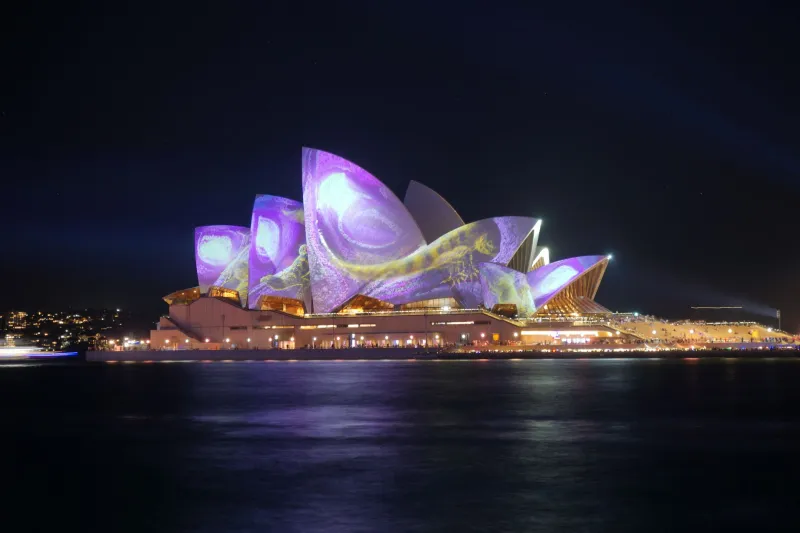
Downtown Detroit, 2:47 a.m. The headquarters of a company that downsized in 2019 sits dark, all 14 floors of it. Then, without warning, a kaleidoscope of neon koi fish begins swimming up the side of the building — three stories of glass suddenly alive with light that shouldn't be there.
Nobody paid for this. Nobody approved it. And technically, nobody broke the law.
Welcome to the world of guerrilla projection mapping, the after-dark art movement quietly turning America's empty commercial real estate into the largest (and most temporary) gallery space in the country.
The Best Canvas in Town Is the One Nobody's Using
Walk through any major downtown in America right now — Chicago, Houston, Portland, Cleveland — and you'll notice something odd. The buildings are empty, but the lights are on.
Post-pandemic, US office vacancy rates have hovered near historic highs, with some downtowns hovering around 20% or more. That's millions of square feet of glass, concrete, and brick sitting idle from 6 p.m. to sunrise. To a projection artist, that's not blight. That's a blank slate the size of a football field.
"I stopped thinking of vacant buildings as sad," says Mara Ellison (a composite voice drawn from several artists we spoke with), a projectionist who's mapped everything from abandoned banks in St. Louis to a dead mall in Orange County. "I started thinking of them as screens that nobody's rented. The biggest screens in the city, actually. And they're just... sitting there."
Unlike graffiti or wheatpasting, projection leaves no trace. No paint, no damage, no evidence. When the projector shuts off at 4 a.m., the building goes right back to being empty. Which raises a genuinely weird legal question: is it even a crime?
The Legal Gray Zone That Made It All Possible
Here's where it gets interesting. Vandalism statutes typically require damage or defacement. Trespassing requires entering someone's property — but most projection crews work from public sidewalks and rooftops of neighboring buildings they've gotten permission to use. Shine a light at a wall and you're generally just... shining a light.
That ambiguity has created a strange new art form with a strange new risk profile. Crews have been shut down by security guards, questioned by cops who couldn't figure out what statute to cite, and — in at least a few documented cases — handed business cards by the building owners mid-takedown.
"A security guy comes out all worked up, and then he just stands there watching," one artist recalls. "They always watch. Nobody walks away. That's how you know it's working."
From Menace to Marketing: When Landlords Get Curious
The plot twist nobody saw coming: commercial real estate brokers started noticing that buildings with projection stunts got attention. In a market where leasing a vacant tower is brutal, a viral clip of your dead building glowing with a 40-foot digital jellyfish is, technically, the cheapest advertising available.
Several cities have started experimenting. Philadelphia and Denver have both run sanctioned light-art programs on vacant properties. Detroit's downtown has hosted commissioned projections on buildings that stood empty for a decade. What started as an underground scene is getting an official stamp — and the artists have complicated feelings about it.
"The second there's a permit, there's a brand manager, and there's a lawyer, and the jellyfish gets a hashtag," Ellison says. "Part of the magic is that it shouldn't be there. You can't permit shouldn't be there."
Why It Hits Different Than a Screen
There's a reason these clips blow up when they hit social feeds. We've all seen stunning visuals on our phones. What we haven't seen is a building — a real, physical, massive object in the world — behaving like it's alive.
Projection mapping at architectural scale does something no Instagram post can: it hijacks your sense of place. The corner where you've walked a thousand times suddenly becomes unrecognizable. That disorientation, even for thirty seconds, is the whole point.
And unlike a mural or a statue, it's ephemeral by nature. You had to be there. The clip is nice, but the clip isn't it.
The Question Cities Can't Answer
So what happens next? Municipalities are stuck between two instincts: crack down on unsanctioned use of public space, or quietly celebrate the fact that someone is making their saddest blocks go viral.
Some cities have started drafting actual ordinances around temporary projection — a sign the practice has outgrown its underground phase. Artists, meanwhile, keep a running joke: the day it's fully legal and fully scheduled is the day they move on to whatever's next.
Until then, if you're walking through downtown after midnight and the empty tower on the corner starts blooming with light, don't call anyone. Just stop, look up, and enjoy the fact that for one night, the most expensive real estate in your city was used for absolutely nothing but wonder.
That's a better return on investment than most of the leases in there ever got.