Your Home Screen Is the Biggest Gallery in America
Think about the last piece of art you looked at for more than an hour. Not scrolled past — actually looked at, over and over, day after day. Odds are it wasn't hanging in the MoMA. It was your lock screen.
The average American checks their phone roughly 100 times a day, and every single one of those check-ins comes with a split-second glance at a background image, a widget stack, a weather display. That's thousands of micro-exposures to whatever's living on your home screen. No museum in the country can compete with that kind of dwell time.
A growing group of digital artists has figured this out — and they're not trying to get their work into galleries anymore. They're trying to get it into your pocket.
The Canvas With No Frame
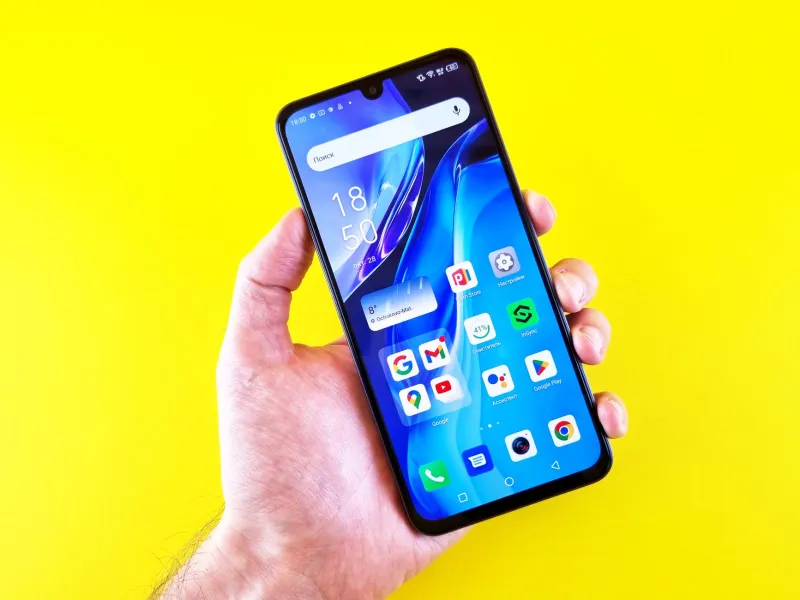
Traditional digital art was built for big screens: desktop wallpapers, digital paintings, NFT billboards. But phone screens are a different beast entirely. They're small, they're portrait-oriented, and they're covered in clutter — app icons, notification badges, a clock, a battery percentage. Designing something beautiful that survives all of that is its own discipline.
"A wallpaper isn't a painting," says one Los Angeles-based designer who's built a following releasing monthly wallpaper drops. "It's a painting that has to share the room with forty icons and still win. If it fights the clock widget, it fails. If it's too busy, your notifications disappear into it. It's composition under occupation."
That constraint has produced a recognizable aesthetic: soft gradients that let white text pop, abstract shapes that read as depth rather than noise, dark-mode-friendly palettes that don't nuke your retinas at 2 a.m. Some artists design specifically for the iOS lock screen's depth effect, layering their work so the clock appears to sit inside the image. It's graphic design, ambient art, and UX rolled into one.
Widgets: The New Mini-Galleries
Then came widgets, and the game changed again.
iOS and Android both opened the door to customizable widget packs, and artists pounced. Suddenly the home screen wasn't just a background — it was a layout, a grid, a curated composition. Photo widgets cycling through a photographer's work. Typography widgets that display a new line of poetry every day. Abstract widget backgrounds that turn a weather app into a piece of ambient minimalism.
The result is something closer to installation art than wallpaper. People spend hours on r/iOSsetups and TikTok arranging their screens like tiny shrines — matching icons, coordinated color schemes, widget stacks that rotate artwork on a timer. What sounds trivial is, functionally, curation. These users are building a gallery they see before their coffee brews.
Artists have noticed. Entire businesses now run on this: Patreon tiers with exclusive monthly drops, Etsy shops selling icon packs, Gumroad bundles of widget-ready artwork. It's not lifestyle money, but for some creators it's a real income stream — recurring, direct, and free of any gatekeeper. No jury, no gallery cut, no algorithm deciding whether your gradient deserves to be seen. Just someone who liked your work enough to look at it a hundred times a day.
Ambient Art You Don't Notice (On Purpose)
The most interesting corner of this scene is the work designed to be barely noticed.
Ambient UI art sits at the intersection of wallpaper and software: slow-shifting gradients, generative patterns that evolve over hours, screensavers that render new abstract compositions each morning. Apps like aether-adjacent weather visuals and generative live wallpapers have turned the phone into something like a slow-moving James Turrell piece — art that works on your peripheral vision.
"The goal isn't to make you stop and stare," one generative artist put it. "The goal is to make your day 2% nicer every time you glance down. That's a harder brief than a gallery show, honestly. Nobody writes a review of a wallpaper. But they live with it."
There's a case to be made that this is the most democratic art distribution in history. A painter in Detroit can drop a pack on Monday and have it on ten thousand screens in São Paulo and Seattle by Friday. No shipping, no framing, no permission.
The Downside of Being Invisible
Of course, there's a catch: wallpaper art is art that gets ignored. It fades into familiarity within days. Nobody remembers who made their lock screen. Attribution is basically nonexistent — screenshots rip work, random Telegram channels redistribute packs, and the artists behind the most-viewed images in America are, mostly, anonymous.
Some lean into that. Others are fighting back with watermarks in the corner, time-limited drops that create scarcity, and community builds that make supporting the artist part of the aesthetic. The subscription model helps too — if the art updates monthly, staying subscribed means staying current.
It's an unresolved tension, and maybe an eternal one. Art has always struggled when it becomes furniture. But there's something quietly radical about a medium that measures success not in views or likes, but in presence — in being the last thing someone sees before sleep and the first thing they see at breakfast.
The frame had a good run. The pocket might be winning.