Skip the White Wall: Why Digital Artists Are Selling Their Art as Enamel Pins and Plush Toys
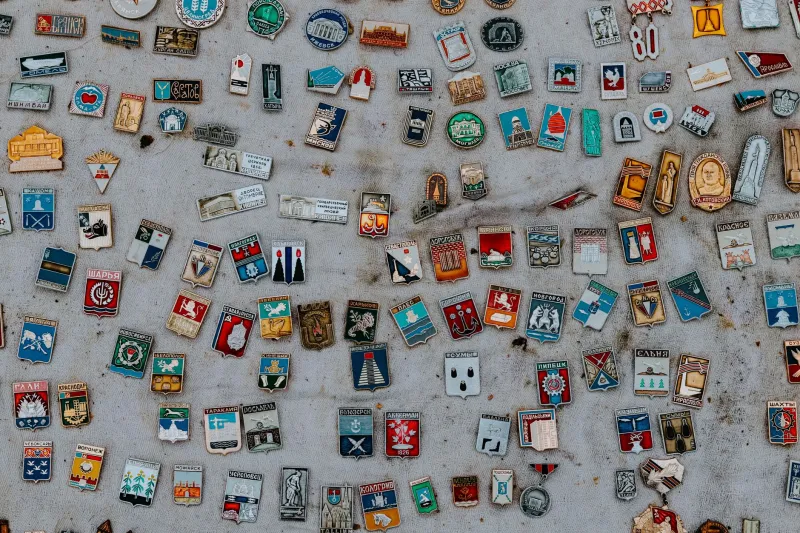
There's a joke that floats around artist alleys at conventions like LA's Lightbox Expo and Chicago's CAKE: the real gallery show is the gift shop. Except lately, it's stopped being a joke. A wave of digital artists — people who spent years posting work into the void of Instagram and, more recently, minting JPEGs into the crypto void — have quietly rerouted their entire practice through merch. Enamel pins. Vinyl stickers. Plush toys shaped like their signature characters. Even, in one memorable case, a run of custom-printed hotel key cards.
And here's the thing: it's working better than the traditional paths ever did.
The Gift Shop Got a Promotion
For most of art history, the gift shop was the epilogue. You walked through the exhibition, had your Big Serious Experience, and then bought a magnet on the way out. The merch was a souvenir of the art, never the art itself.
Digital-native creators have flipped that sequence. They lead with the object. A Los Angeles-based illustrator who goes by the handle of a single cartoon frog told me her pin designs now outsell her print editions ten to one. "Nobody hangs a print anymore," she said, half-laughing. "They put a pin on their denim jacket and suddenly they're a walking exhibition. And they didn't need a nail or a landlord's permission."
That last part isn't a throwaway. For a generation renting apartments in Brooklyn, Portland, and Austin, wall space is temporary and walls themselves are often off-limits. A pin travels. A sticker adheres to a laptop that goes to coffee shops, offices, airports. The art becomes ambient, portable, social.
Why Screens Lost
The obvious question: digital artists already had the perfect medium — screens. Why downshift into die-cast metal and embroidered patches?
Because the screen is where attention goes to die. Every artist I spoke with described the same exhaustion cycle: post, get buried by the algorithm, post again. NFTs were supposed to fix this and instead introduced a new problem — art as asset, valued by ticker charts, discussed in Discord servers that felt more like trading floors than studios.
Physical merch sidesteps both traps. It can't be scrolled past. It doesn't need a wallet. And crucially, it has what one Portland-based designer called "the friction of sincerity." Nobody spends eighteen dollars on a plush toy of an original character as a speculative investment. They buy it because it made them feel something. The object forces the emotion to be real.
There's also a scarcity mechanic that actually functions. Limited runs of 100 pins sell out in minutes at conventions. Compare that to infinite digital editions, where scarcity has to be asserted rather than felt. A sold-out sticker drop creates the same energy as a sneaker release — and everyone in the US under forty understands sneaker release culture instinctively.
The Museum Lobby Was Always the Point
Here's the slightly heretical thesis underneath all this: maybe the gift shop was never the consolation prize. Maybe it was always the main event.
Think about what people actually remember from museum visits. The MoMA gift shop is arguably as culturally significant as half the exhibitions it serves — it's where ordinary Americans first brought home Eames-inspired objects and Bauhaus color theory. The Tate's postcards taught a generation of tourists what modernism looked like. The gift shop has always been the museum's most democratic room: no dress code, no admission fee, no gatekeeping.
Digital artists are simply claiming that room for themselves, cutting out the museum entirely. They run their own drops, control their own editions, and sell directly at tables at events like DesignerCon in Anaheim or via their own online shops. The economics are brutally straightforward — a pin that costs $4 to produce sells for $14, and the artist keeps all of it. No gallery taking fifty percent. No platform taking thirty.
Not Without Its Critics
The purists, of course, have notes. Calling a keychain art dilutes the term, they argue. If everything is collectible, nothing is precious. One curator at a mid-sized Midwest museum told me she worries that merch-first thinking trains audiences to value art by its function rather than its ambition.
But the artists push back hard. The pins aren't replacements for the digital work — they're entry points. Someone buys a $12 sticker, falls down the rabbit hole, ends up following the artist's animated shorts and eventually buying a large editioned print. The gift shop is the top of a funnel that the traditional art world never bothered to build because it assumed audiences would just... show up.
They don't show up. They have to be met where they are — which, for Americans in 2025, is often holding a tote bag with a laptop sticker on it.
The New Canvas
There's something quietly fitting about the whole movement. Digital art was born in the ephemeral — pixels, projections, files that exist everywhere and nowhere. Its most successful physical form turns out to be the opposite: small, durable, pocketable things that age, scratch, and get lost in jacket pockets.
The museum gift shop, it turns out, was never the place where art went to be commodified. It was the place where art went to be kept. And a generation of digital artists, tired of waiting for the wall, has finally claimed the counter.
Next time you're at a convention or scrolling a small artist's shop and see a row of enamel pins you don't quite understand — look closer. That's not merch. That's the exhibition.