Five Bucks, Infinite Glances: The Secret Economy of Designer Phone Wallpapers
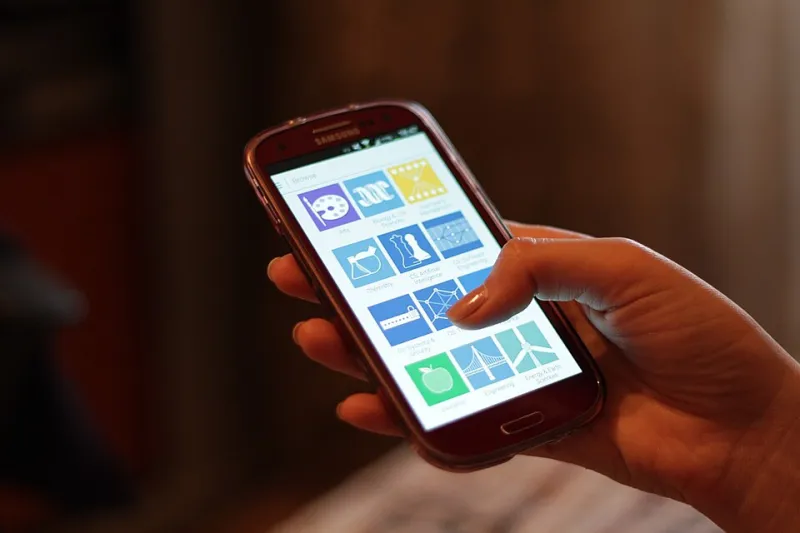
Photo: Océanos y dados, CC0, via Wikimedia Commons
Think about the artwork you've looked at more than anything else in your life. Not the Mona Lisa. Not the poster in your college dorm. It's your lock screen. Most of us glance at it somewhere north of 80 times a day, which adds up to roughly 30,000 views a year. By any museum standard, that's the most successful piece of art you own.
And yet almost nobody paid a dime for it.
That's the math a small but growing community of digital artists has been quietly recalculating — and some of them are making it work. Welcome to the designer wallpaper economy, where a single image sells for the price of a fancy coffee and, if the artist does it right, lives on the most exposed canvas in the buyer's life.
The $5 Masterpiece
The pitch is deceptively simple: an artist releases a limited run of wallpapers — sometimes 50, sometimes 500, occasionally just ten — priced between $3 and $12. Buyers get a download link, a high-res file sized for their specific phone, and often a little certificate or numbered receipt. Then the image goes live on their lock screen, where it will be seen more often than anything hanging in the Getty.
What's surprising isn't that people buy them. It's how the market behaves once they do. Limited runs sell out in hours. Collectors trade files in Discord servers. Some artists have waitlists that stretch across multiple releases, the way sneakerheads camp for a Jordan restock.
"I used to sell prints," one wallpaper designer told me, describing the shift that pulled her out of the Etsy print game. "A print goes on a wall. Maybe someone sees it when they walk past. A wallpaper is with someone. It's the first thing they see when they wake up. That's not decoration — that's a relationship."
But Couldn't You Just Screenshot It?
Yes. Obviously. And this is the question every wallpaper artist has answered roughly ten thousand times.
The honest answer is that screenshots can absolutely steal the image — which is exactly why the people paying usually aren't paying for the pixels. They're paying for the same reasons anyone buys anything in the digital age: provenance, access, and the slightly irrational but deeply human desire to support the thing you love.
Many artists lean into this rather than fight it. Buyers on limited runs get perks the screenshot never will: early access to the next drop, variant colorways, a name in the credits, or membership in the community around the work. One designer includes a tiny hidden detail in each paid file — a signature constellation, a stamped monogram — that screenshots flatten into invisibility at typical lock screen resolution.
Sound familiar? It should. This is the same logic that carried NFTs, merch drops, and Patreon into the mainstream, minus the blockchain evangelism and the carbon guilt. It's patronage with a nicer interface.
Scarcity, but Make It Gentle
What separates the good wallpaper artists from the grifters is how they handle scarcity. The sleazy version is artificial hype: countdown timers, fake urgency, FOMO weaponized. The artists actually thriving in this space tend to do the opposite — small runs, honest communication, and prices that reflect the weird intimacy of the product.
One Los Angeles-based designer caps every release at 100 downloads, ever. Once a design sells through, it's retired permanently, and she posts the final count publicly. "The wallpaper is a daily companion," she says. "You don't want ten thousand people living with the same companion. You want it to feel chosen."
That restraint has paid off. Her releases now sell out in under an hour, largely through word of mouth in design circles and Instagram close-friends stories rather than any ad spend.
The Standouts Worth Watching
The space is young and scattered, but a few archetypes keep appearing:
- The Minimalists — designers making quiet, gradient-heavy compositions built for readability. Their work is engineered around the clock display and notification badges, treating the lock screen like a type-setting problem. Think of it as Swiss design with a bedtime mode.
- The Nature Realists — photographers-turned-wallpaper-artists shooting hyper-specific American landscapes: fog on the Oregon coast, neon in a Tucson strip mall, the exact blue of a Lake Michigan afternoon. Limited to a few hundred downloads per scene.
- The Generationalists — artists using code and generative systems to produce one-of-one wallpapers, so no two buyers ever share a lock screen. The most expensive corner of the market, and the closest thing it has to fine art.
- The Nostalgia Dealers — pixel-art and Y2K-inspired designers whose work looks like a Nokia screensaver that went to art school. Reliably the fastest sellouts.
How to Spot Collectible-Quality Work
If you're tempted to spend actual money on something your phone already does for free, a few signals separate the keepers from the clutter:
They design around the interface. Amateur wallpapers fight the clock; good ones compose around it. If the artist talks about where the time display sits, they've thought about the medium.
They retire designs. Permanence is the enemy of collectibility. Artists who promise never to re-release are the ones whose early work gets valuable.
They show their process. The best wallpaper designers post sketches, rejected colorways, and test renders. It signals a practice, not a product mill.
They price like it's art, not an app. Suspiciously cheap unlimited downloads usually mean volume farming. A real limited run costs real money.
The Most-Viewed Gallery in the Country
There's a running joke in this community that they're competing with Apple and Google's default wallpapers — the most distributed images on Earth. But that's exactly the point. Default wallpapers are chosen by a committee in Cupertino. These are chosen by you, paid for with your own five dollars, and carried through every meeting, subway ride, and 2 a.m. doom-scroll.
The art world spent decades trying to get work in front of people. The wallpaper artists solved it differently: they went where the eyes already are. And at $5 a view — well, per few hundred thousand views — it might be the best deal in American art right now.