Art You Only See When You Look Away: The Strange Business of Selling Idle Screens
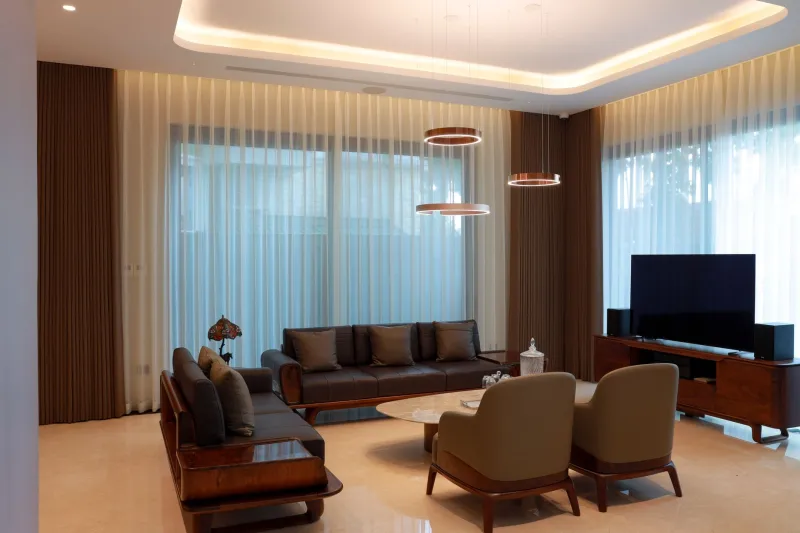
There's a particular kind of silence in a living room at 11 p.m. The TV isn't off — it's just waiting. And if you're one of a growing number of American households, that waiting screen isn't a black void or a stock photo of a mountain. It's a slow-moving ink bloom that took an artist three months to render, and you paid forty bucks for it.
Welcome to the idle screen economy, where the least-watched surface in your home has become the most interesting canvas in digital art.
The Comeback Nobody Scheduled
Screensavers were supposed to be dead. Born in the early '80s to prevent burn-in on CRT monitors, they became the unofficial mascot of 1990s office culture — the flying toasters, the maze pipes, the shimmering text that said COMPANY MEETING MOVED TO 3PM. By the smartphone era, the whole category felt like a fax machine with a personality.
Then two things happened. First, TVs got enormous, gorgeous, and permanently on. Second, a wave of experimental digital artists got tired of fighting for attention in feeds and started asking a deceptively simple question: what if the art didn't need you to look at it at all?
The result is a genre that thrives on your absence. Ambient loops — drifting fog, slow tectonic color shifts, generative fish that never repeat a path — built specifically for the moments you're doing something else. Folding laundry. Making a sandwich. Falling asleep on the couch during the fourth inning.
The Marketplace of the Half-Glance
What started as free downloads on enthusiast forums has matured into something that looks suspiciously like a real market. Independent artists now sell ambient motion packs on their own sites, through digital storefronts, and — in the most collector-brained twist — as numbered editions with ownership certificates, priced like small-run prints rather than apps.
The pricing logic is pure art world: a loop is released in an edition of 100, the first ten sell cheap, and by the time the run closes, latecomers are paying triple. Some artists bundle seasonal variations — a fireplace loop for January, a firefly field for July — turning what used to be software into something closer to a wardrobe for your walls.
There's also a hardware angle. E-ink displays and dedicated ambient screens have trickled into the US market at prices that make them plausible gifts, and each one ships hungry for content. The idle screen stopped being a default setting and became a slot to fill.
Why Pay for Something You Barely Watch?
The obvious objection: who spends money on art they only see peripherally? But that objection assumes attention is the point — and for this scene, it's the opposite of the point.
Think about what Americans already accept as ambient culture. Fireplace channels on cable. Lo-fi study streams running for millions of hours. Yule log marathons every December. We've long paid for background, we just never called it art. What's changed is that artists are now designing for the background deliberately — pieces calibrated to be beautiful at a glance and invisible over time, so they don't rot into wallpaper noise.
There's a wellness thread running through it too. A dark, dead TV in a living room reads as a hole; a slow, warm loop reads as atmosphere. Homeowners are treating these the way previous generations treated lava lamps and aquariums — mood infrastructure, not content.
The Artists Who Want to Be Ignored
Talk to the people making this work and a common philosophy emerges: the feed broke the eye. Everything online is engineered to spike your attention, then spike it again, then again, until you feel like a dartboard. Ambient screen art is a reaction formation — work that reduces stimulation on purpose.
That means the craft constraints are brutal in a quiet way. A loop has to run for hours without a visible seam. It has to survive being watched by someone falling asleep, someone doing dishes, someone glancing over mid-conversation. No hook, no drop, no payoff. Just texture, color, and patience. Some artists describe it as closer to composing wallpaper than making film — a discipline of the almost-invisible.
And there's a sneaky longevity to it. A loop you half-watch for a year embeds itself in your memory in fragments: the way the light hit at minute forty, the exact shade of that one dusk. It becomes part of the room's biography. That's a relationship with art most gallery visits can't touch.
From Office Boredom to Living Room Default
The historical irony is delicious. Screensavers were invented to protect machines from their users, then became a punchline, then disappeared. Now they're back — not as software, but as a commodity category with editions, drops, and loyal collectors.
The market is still young and appropriately weird. Pricing is inconsistent, discovery is scattershot, and half the scene runs on Discord servers and word of mouth. But the direction is clear: as screens colonize every surface of the American home, the moments between content have become the last unclaimed real estate. Artists got there first.
So the next time your TV dims into its standby glow, consider what's filling that void. Somewhere, someone rendered that fog by hand, numbered it, and sold out in a weekend — all for a piece of art whose entire job is to be beautiful while you're busy looking somewhere else.