Boring on Purpose: The Artists Who Want You to Click Away
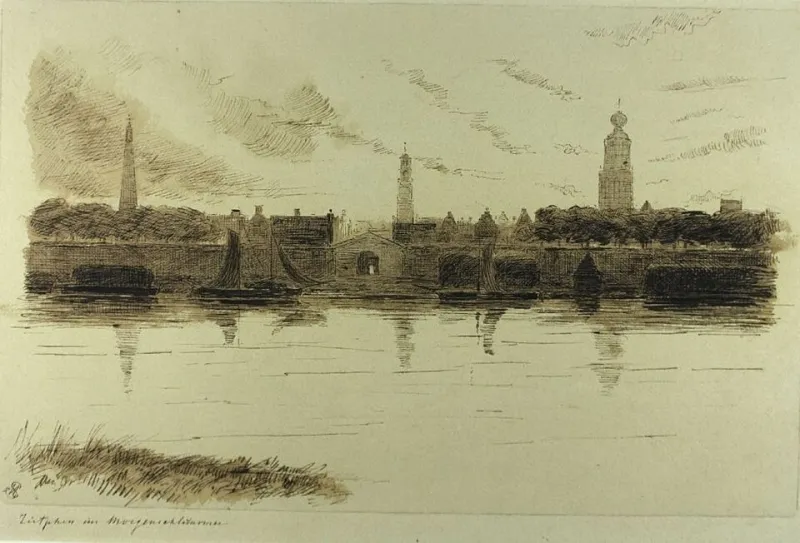
Photo: M.L.Ch. Staring, Public domain, via Wikimedia Commons
Somewhere on the internet right now, someone is watching a 47-minute video of a cursor blinking. Nobody asked for it. The engagement metrics are terrible. And that's entirely the point.
A quiet but growing movement in digital art is pushing back hard against the logic of the attention economy — that relentless, data-driven machine that rewards dopamine hits, rapid cuts, and content engineered to keep eyeballs glued. These artists aren't trying to beat the algorithm. They're trying to make it irrelevant.
What Even Is Anti-Engagement Art?
The term sounds contradictory. Art is supposed to attract attention, right? But creators in this space are deliberately building experiences that resist consumption. Think: static-heavy audio pieces that loop without resolution, visual installations that take hours to change, interactive web projects that crash your browser by design.
It's not laziness. It's actually a lot of work to make something that functions as a kind of conceptual trap — something that lures you in with a title or thumbnail, then refuses to deliver anything you'd normally want from digital media.
Some of this traces back to older avant-garde traditions. Andy Warhol's Empire — an eight-hour fixed shot of the Empire State Building from 1964 — gets name-dropped constantly in these conversations. John Cage's 4'33" is another touchstone. But what's different now is the context. These new works exist inside platforms explicitly built around maximizing time-on-site, click-through rates, and algorithmic amplification. Dropping a slow, deliberate, anti-satisfying piece into that environment isn't just an aesthetic choice. It's a confrontation.
The Frustration Is the Feature
A lot of this work leans into what theorists call "temporal stretching" — basically, messing with your sense of how long things should take. You're trained by TikTok, YouTube Shorts, and Instagram Reels to expect a payoff within seconds. Anti-engagement art weaponizes that conditioning.
There are artists releasing web-based pieces where the "loading" screen is the entire work. Others are posting videos that appear to be normal tutorials or vlogs but gradually devolve into repetition, white noise, or total silence. The comment sections on these pieces are genuinely fascinating — half the people are furious, half are having something close to a meditative experience, and a small contingent is writing long, earnest essays about what they just watched.
That friction? That confusion about whether you're being pranked or moved? That's the zone these creators are chasing.
Capitalism, Clicks, and Creative Autonomy
The critique embedded in a lot of this work is pretty direct once you understand the context. Platforms don't just reward engagement — they punish its absence. An artist who posts something with low watch time gets buried. An artist who optimizes for hooks, retention, and shareability gets amplified. Over time, that system shapes what gets made.
Many of the artists working in this anti-engagement space are explicitly naming that pressure as the thing they're pushing against. They're not interested in building audiences through platform logic. Some are actively trying to make their work incompatible with the metrics systems that determine what gets seen.
There's something almost paradoxical about the fact that a lot of this work ends up going semi-viral anyway — usually because people share it out of confusion or outrage. The algorithm doesn't always know what to do with something genuinely strange, and sometimes that weirdness creates its own kind of traction.
Tedium as a Political Act
It's worth sitting with the idea that boredom itself can be radical. In a media landscape that's constantly competing for your nervous system, choosing to make something slow, withholding, or deliberately unsatisfying is a kind of refusal.
Some creators frame it in explicitly political terms — as a rejection of the productivity-obsessed, growth-hacking culture that has colonized not just social media but art-making itself. If everything you make is optimized to perform, what does that do to the work over time? What does it do to you?
Others are less ideological about it and more instinctual. They're just tired of making things that feel like content. They want to make something that sits differently in the world — something that doesn't behave the way a digital object is supposed to behave.
The Audience Problem (And Why It Doesn't Matter)
Here's the honest tension: most people don't want to watch a 47-minute blinking cursor. Most people will click away. And in a creator economy where audience size often determines whether you can afford to keep making things, deliberately alienating viewers carries real costs.
But a lot of the artists doing this work aren't primarily living off platform revenue. They're showing in galleries, doing residencies, getting grants, selling NFTs or limited digital editions. The platforms are more like a public-facing gallery wall than a monetization strategy.
That separation matters. It gives them room to make things that don't have to perform. And weirdly, that freedom to make unwatchable, frustrating, deliberately tedious work might be the most punk thing happening in digital art right now.
So next time you click on something and immediately want to close it — pause for a second. Someone might have worked really hard to make you feel exactly that way.